
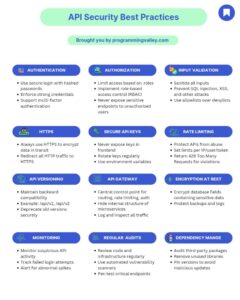


APIs are powerful, but also a common target for attacks. Without proper safeguards, they can expose sensitive data, break systems, and damage trust. Here’s a practical guide to securing your APIs effectively.
1. Authentication
- Use hashed passwords (e.g., bcrypt)
- Enforce strong password requirements
- Enable multi-factor authentication (MFA)
2. Authorization
- Apply role-based access control (RBAC)
- Restrict access to high-risk or sensitive endpoints
3. Input Validation
- Sanitize all input data
- Protect against SQL injection, cross-site scripting (XSS), and other common attacks
- Use allowlists instead of denylists
4. HTTPS
- Encrypt all traffic with HTTPS
- Redirect all HTTP traffic to HTTPS automatically
5. Secure API Keys
- Never expose keys in frontend code or URLs
- Store keys in environment variables
- Rotate keys regularly and audit access
6. Rate Limiting
- Limit requests per user, token, or IP address
- Return HTTP 429 (Too Many Requests) when limits are exceeded
7. API Versioning
- Use clear, predictable versions like
/api/v1/,/api/v2/ - Phase out older versions with deprecation notices
8. API Gateway
- Manage authentication, throttling, and routing centrally
- Hide internal architecture and microservices
- Log all traffic for monitoring and debugging
9. Encryption at Rest
- Encrypt sensitive data fields in your database
- Secure your backup files with encryption and access control
10. Logging and Monitoring
- Monitor failed logins, API errors, and traffic spikes
- Set up alerts for anomalies or suspicious activity
11. Security Audits
- Use automated vulnerability scanners regularly
- Perform penetration testing, especially for critical endpoints
12. Dependency Management
- Regularly audit third-party packages and libraries
- Remove unused dependencies
- Lock package versions to avoid untested updates
Security should be part of your API lifecycle—not an afterthought.
Start applying these best practices today and build secure, resilient applications.



No Comments