


SQL is one of the most important skills for data analysts, business analysts, and aspiring data scientists.
If you want to break into data in 2026, learning SQL is one of the fastest moves you can make.
This guide covers the best SQL courses for beginners based on structure, job relevance, and long-term value.
Quick Picks
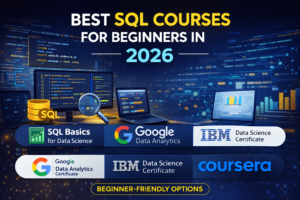
- Best overall starter course: SQL Basics for Data Science
- Best for career switchers: Google Data Analytics Certificate
- Best for long-term data science path: IBM Data Science Certificate
- Best for BI-focused learners: Google Business Intelligence Certificate
- Best for broader learning options: Coursera Data Science Courses
1. SQL Basics for Data Science
This is one of the best starting points if you want to learn SQL from scratch without getting overwhelmed.
Start SQL Basics for Data Science
What makes it strong:
- Beginner-friendly structure
- Covers the core SQL concepts you actually need
- Good starting point before moving to advanced analytics
You will learn:
- SELECT statements
- Filtering with WHERE
- Sorting and limiting results
- Basic joins and aggregations
Best for complete beginners who want to start fast.
2. Google Data Analytics Certificate
This is one of the most practical certificates for beginners who want to become data analysts. It includes SQL as part of a full analytics path.
Start Google Data Analytics Certificate
Why it stands out:
- Structured career-focused path
- Includes SQL, spreadsheets, and analytics workflows
- Strong fit for entry-level analyst roles
Best for learners who want SQL plus job-ready business analytics skills.
3. IBM Data Science Certificate
If you want more than SQL and aim for data science later, this certificate gives you a broader technical path.
Start IBM Data Science Certificate
Why it is valuable:
- Combines SQL with Python and data analysis
- Includes projects
- Supports transition toward data science and machine learning
Best for learners who want long-term growth beyond analyst roles.
4. Google Business Intelligence Certificate
This is a smart next step if you want to move from basic reporting into dashboards, decision-making, and business intelligence.
Start Google Business Intelligence Certificate
Why it matters:
- Good bridge between SQL and BI tools
- Strong fit for reporting and dashboard roles
- Useful for analysts who want more business impact
Best for learners interested in analytics and BI career paths.
5. Coursera Data Science Courses
If you want to explore more SQL-related learning paths, this collection gives you broader options across analytics, data science, and machine learning.
Browse Coursera Data Science Courses
Best for learners who want to compare multiple paths before choosing one.
What You Must Learn in SQL
- SELECT and filtering
- JOINs
- GROUP BY and aggregations
- Subqueries
- Window functions basics
If a course skips these, it is not enough for real job preparation.
How Long Does It Take to Learn SQL?
You can learn SQL basics in 2 to 4 weeks with steady practice.
You can become interview-ready in 6 to 8 weeks if you solve real problems and build one or two portfolio projects.
Common Mistakes Beginners Make
- Watching tutorials without writing queries
- Skipping JOINs because they look hard
- Not practicing on real datasets
- Trying to learn too many tools at once
Final Recommendation
If you are a beginner, start with one SQL-focused course.
If you want a job-ready path, combine SQL with analytics training.
If you want broader technical growth, choose a program that also includes Python and projects.
Best places to start:


No Comments